SAMPLE AND DEMONSTRATION ONLY. Illustrative analysis of publicly available information, prepared by BI Consulting Services. Not affiliated with, endorsed by or produced for any company shown.
Demonstration · Illustrative data · BI Consulting Services
Georgia Ports Authority×BI Consulting Services
Customer Service Center inbox board — shared-mailbox volume, first response and the 4-hour SLA
One place to see what lands in the Customer Service Center mailboxes for the Port of Savannah, the Port of Brunswick and the inland terminals — by hour, by category, by agent — and where the 4-hour first-response commitment slips.
Interactive demoPrepared for TaylorSeptember 2026
Period
Mailbox / terminal
1
Emails received per day, stacked by category
Bars = received in the period · dotted line = prior period, same length · 4-hour SLA attainment printed above each bar
2
What this board answers
Three questions the Customer Service Center asks every Monday
Response-time clock — median first response by hour × weekday
Each cell is the median hours from receipt to first agent reply. Gate hours at Garden City are shaded; the 4-hour line is where cells turn amber and red.
3
Volume and SLA by email category
Share of emails received, and the % answered within 4 hours
4
Inbox flow — received → triaged → resolved
Where every email in the period ended up. Ribbon width is proportional to count.
5
Agent workload
Emails handled per agent vs. a fair-share line; utilisation = handled ÷ capacity
6
Open backlog by age
Emails still awaiting a first reply at the end of the period
7
Ask the data
Natural-language layer over the same model — a mock of what an analyst would type
Which email categories missed the 4-hour SLA this week?
8
Also from BI Consulting Services
Private AI on your own server
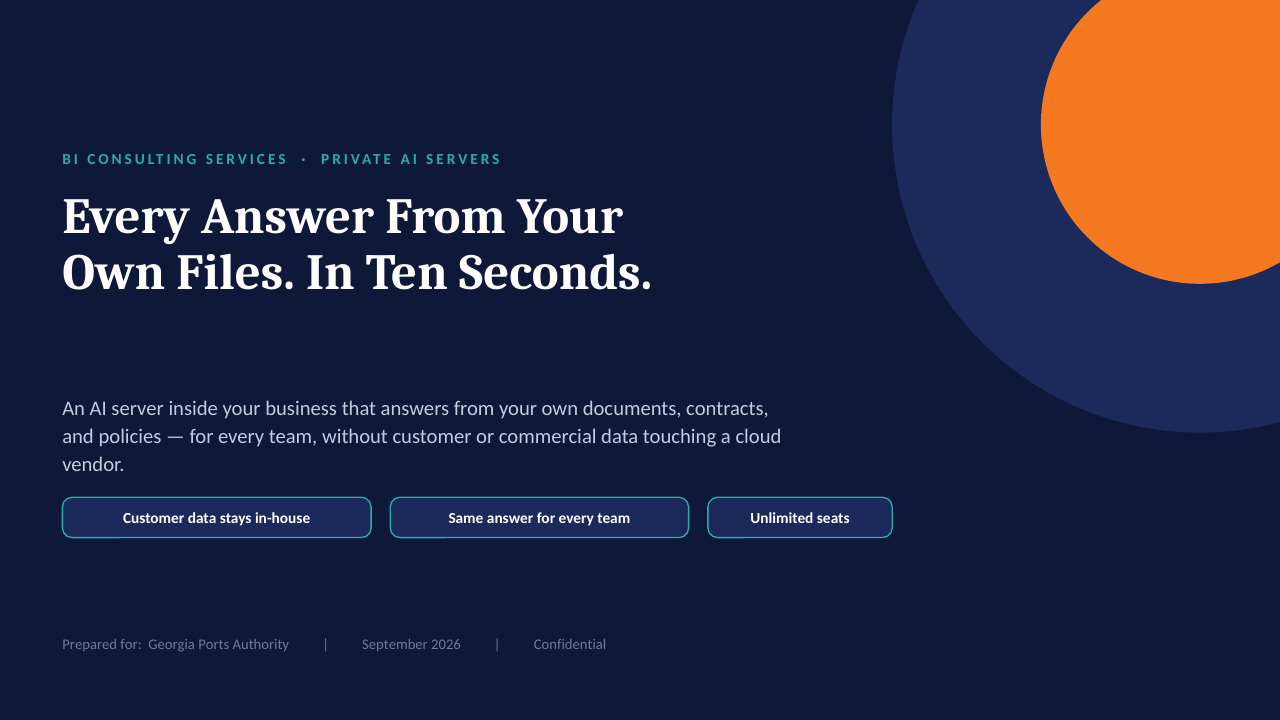
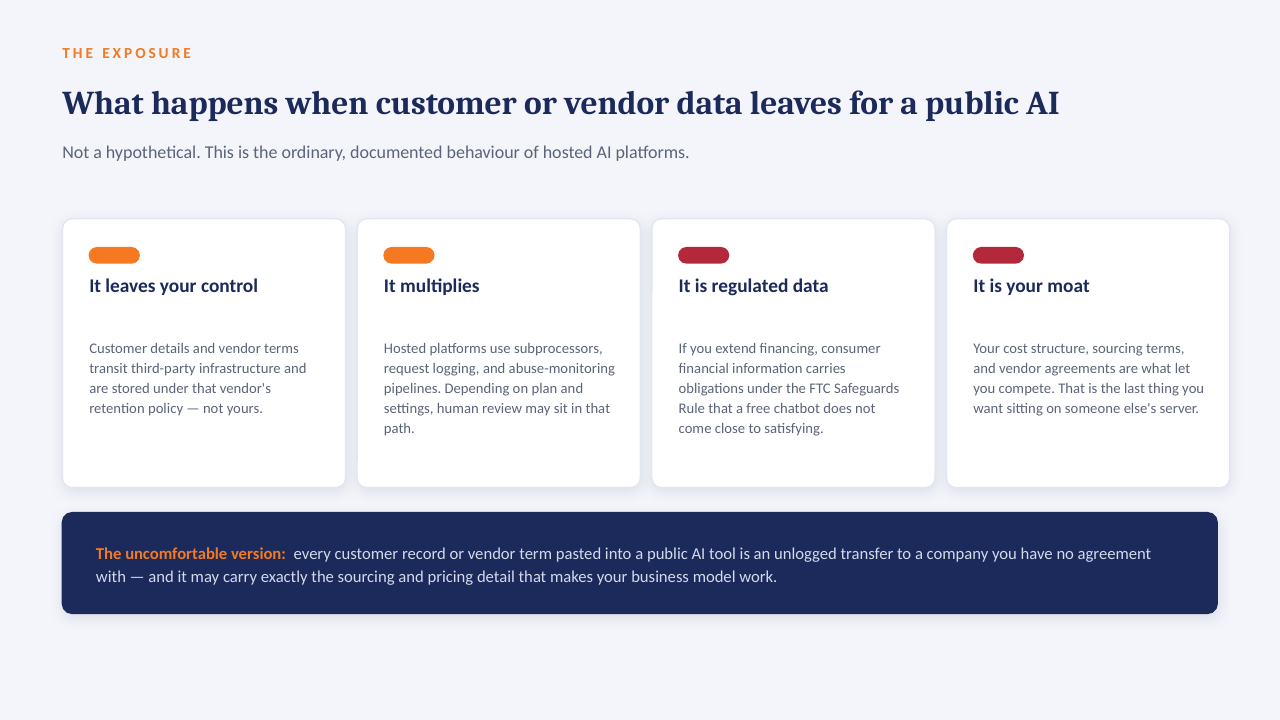
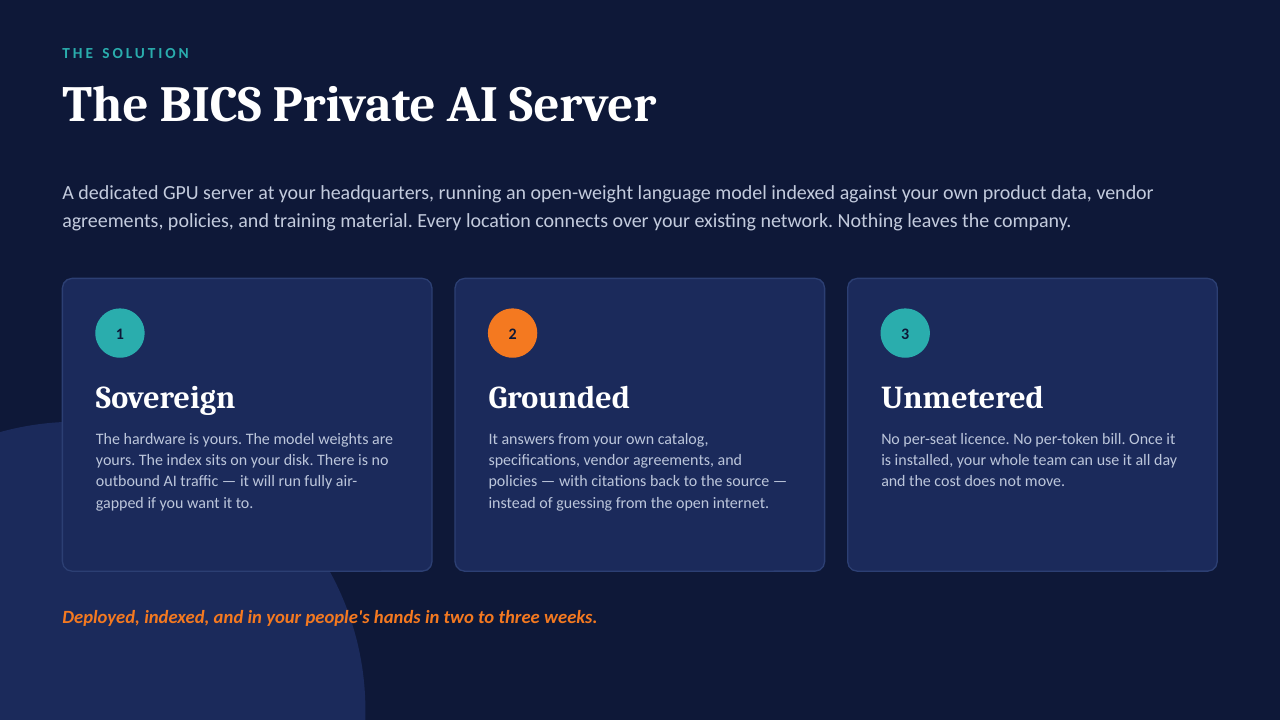
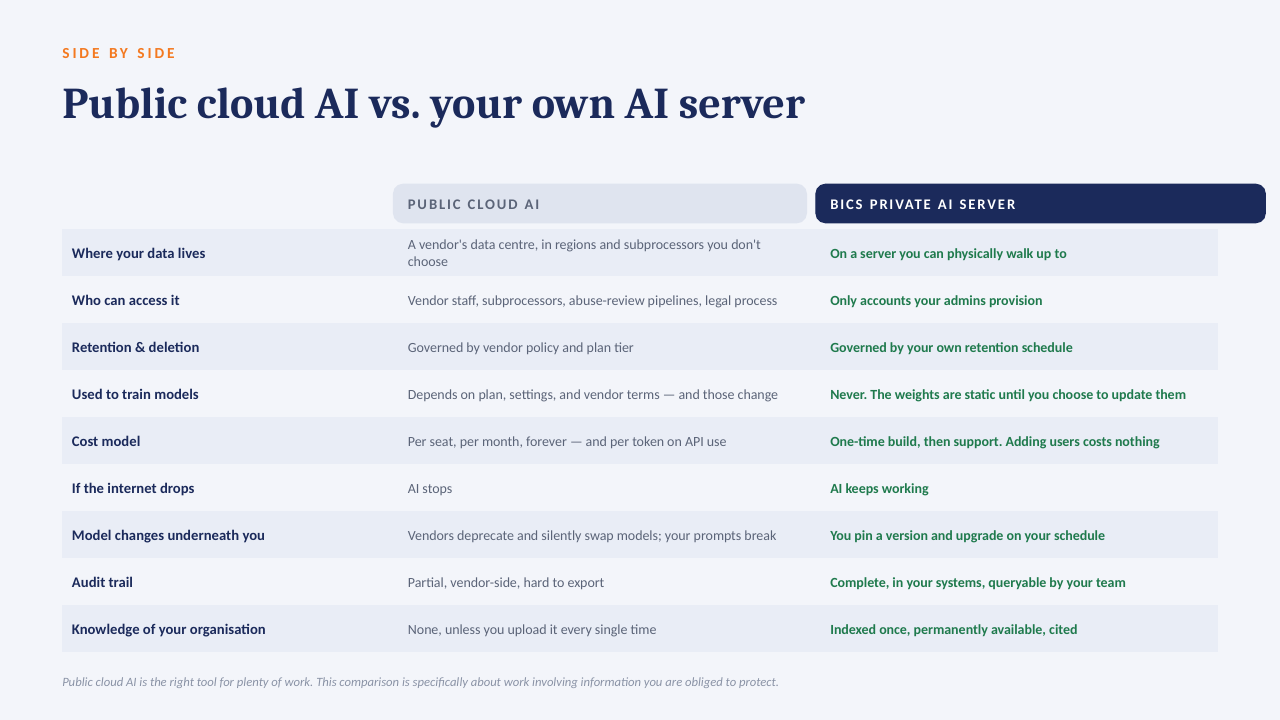
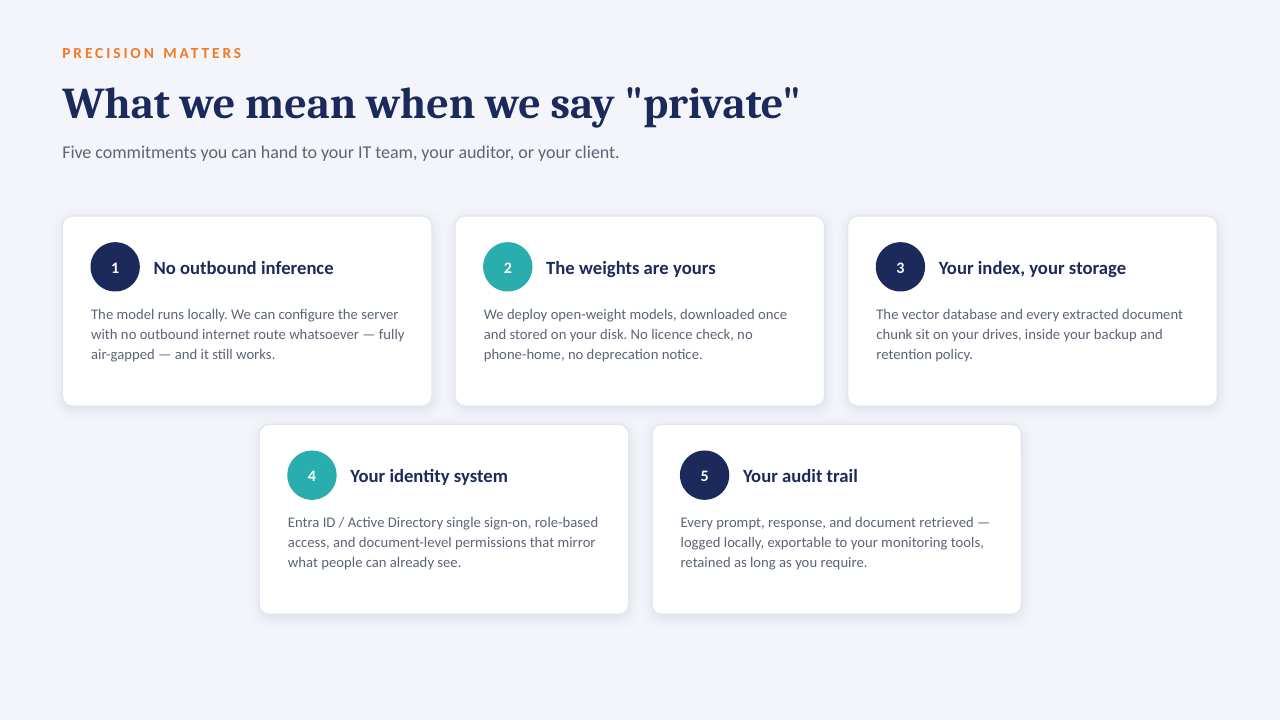
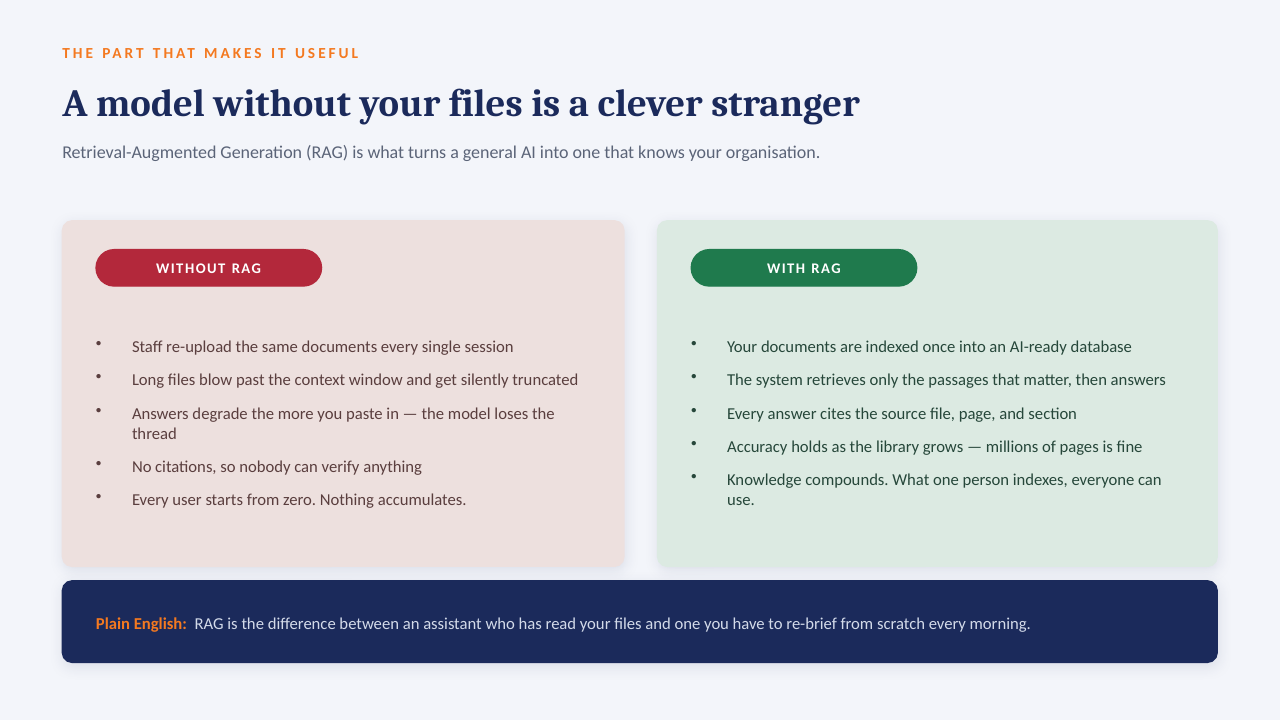
The "ask the data" panel above is built to run on a GPU server inside your own network: an open-weight model over your own documents, with every answer citing the file it came from. No per-seat licence, works offline, and nothing leaves the building.
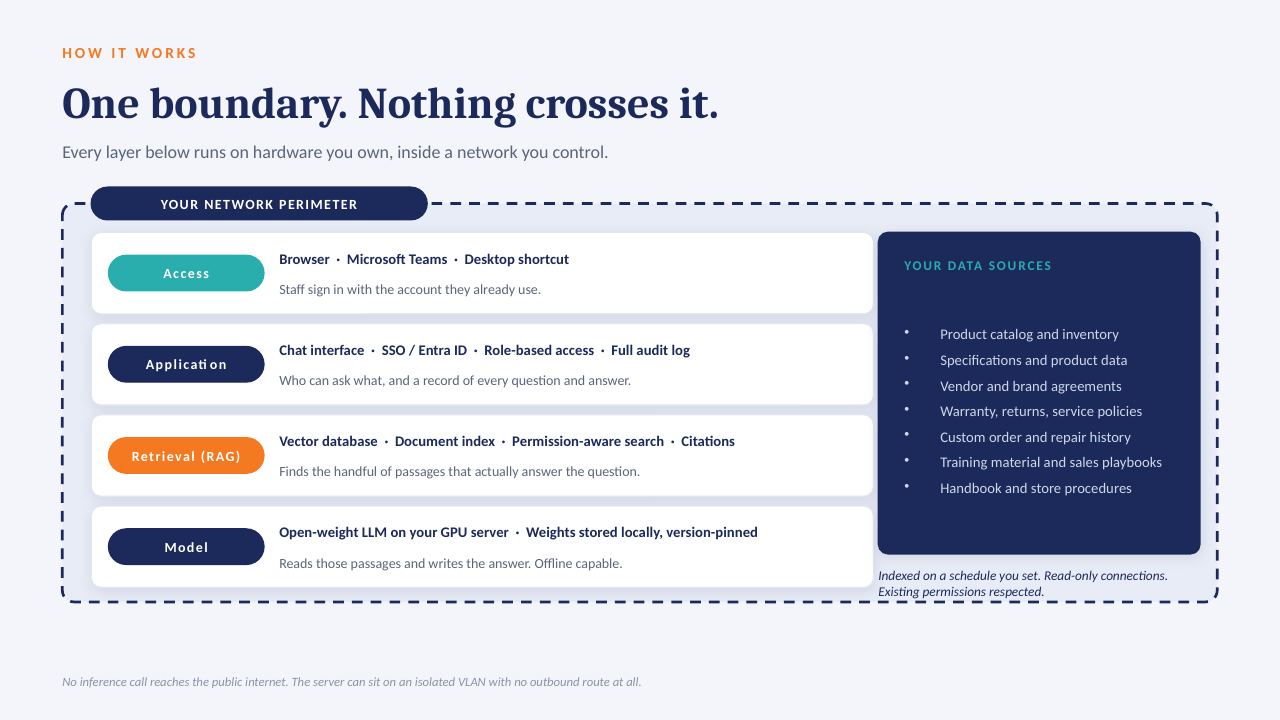
How it sits in your environment
One appliance-class server on your rack or in a secured closet. Your files are indexed where they already live; the model runs locally; answers come back with the source page attached.
What that means in practice
1
Your data only, on your hardwareAn open model over your own documents and exports. No third-party AI processor, no data-transfer agreement to review.
2
Every answer cites its sourceReplies point to the file and page they were drawn from, so people check the answer instead of trusting it blind.
3
No per-seat licenceThe whole team can ask questions. Cost is the server and our build, not a monthly number that grows with headcount.
4
Works offlineIf the internet connection goes down, the answers still come. Nothing depends on a vendor's uptime or pricing changes.
The short deck
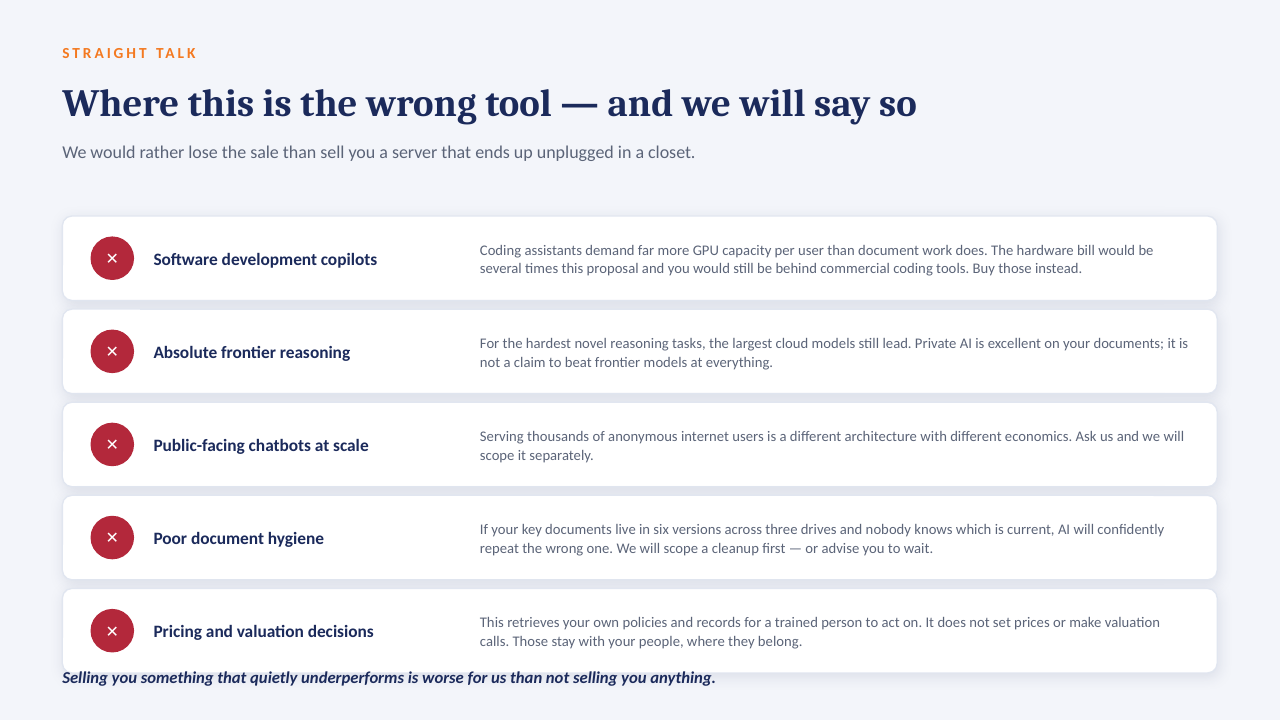
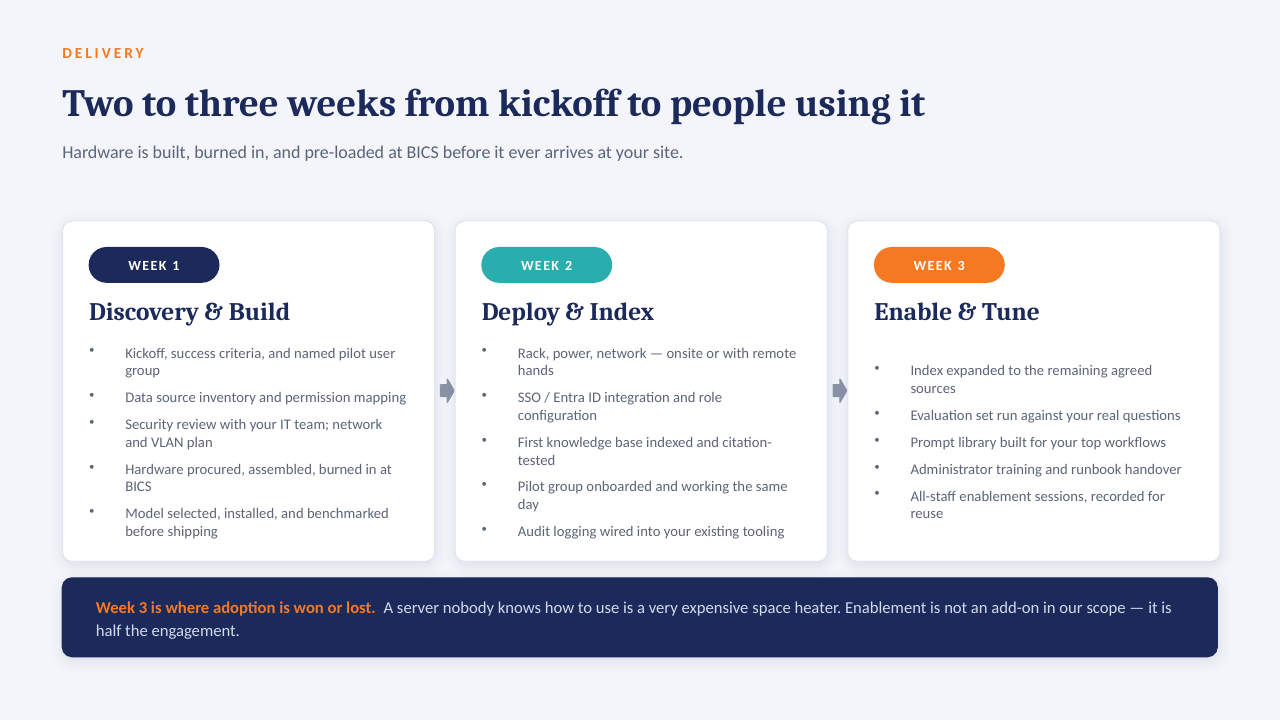
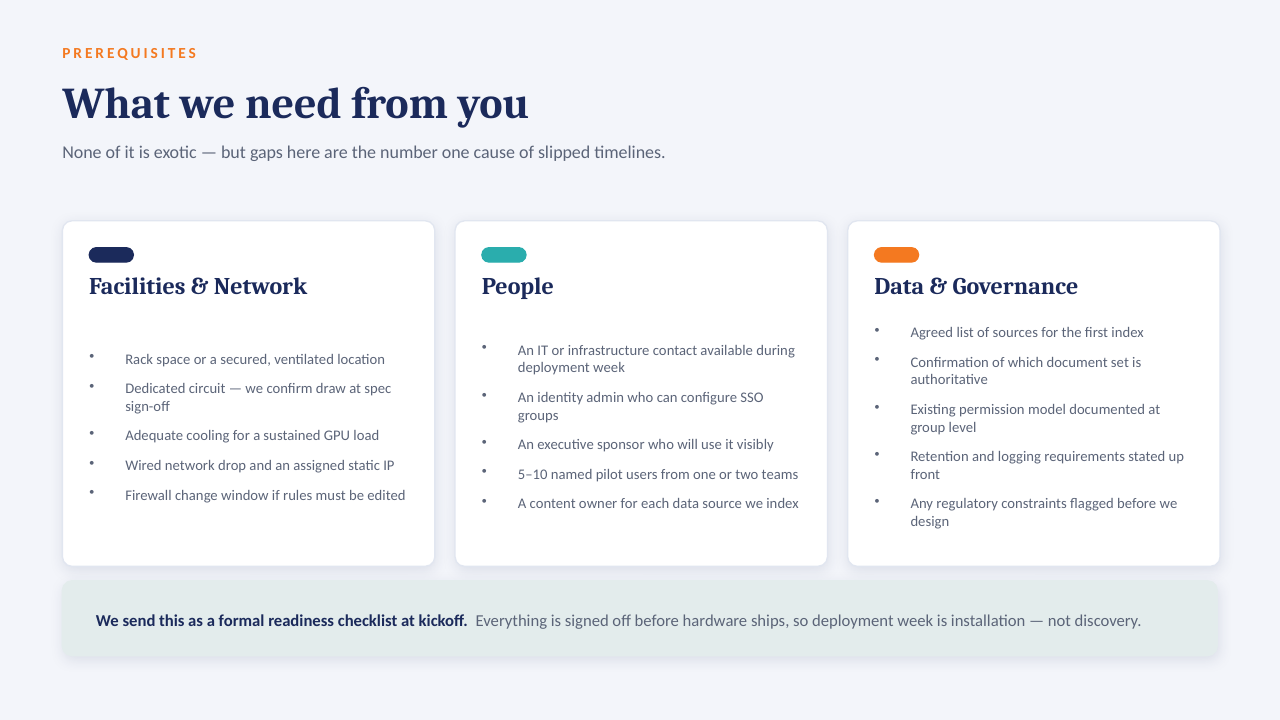
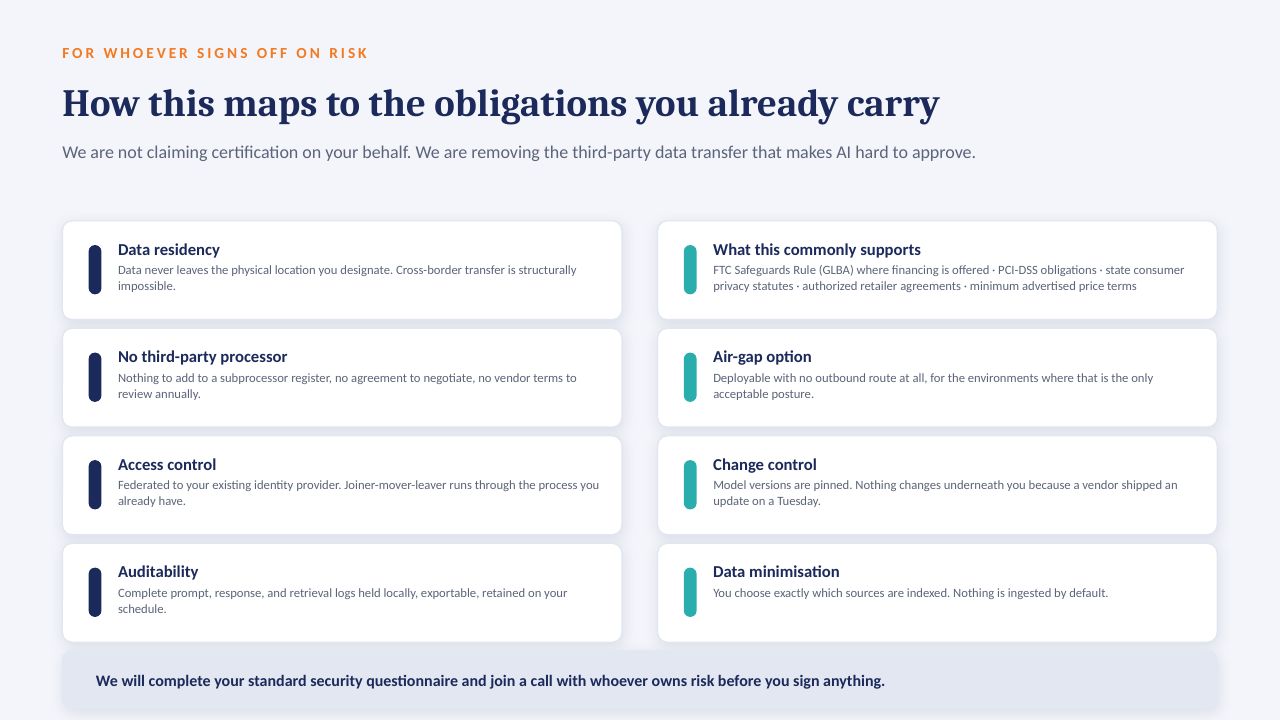
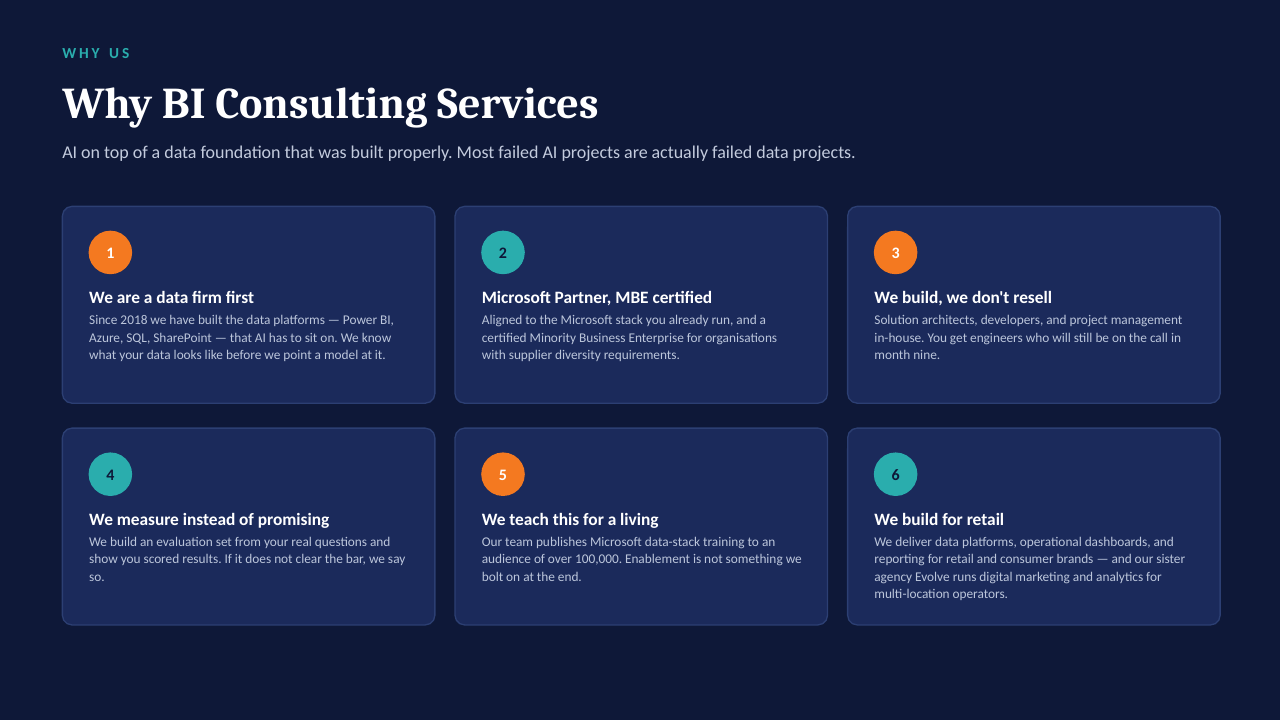
14 slides on how a private AI server is scoped, secured and rolled out. Click through, or take the PDF.